Ingredient profile
Ashwagandha in SodaBoost: How Much Is in a Gummy and What Studies Show
Ashwagandha is the sixth of nine ingredients in the 82 mg SodaBoost blend. The label does not print its amount. Because it comes after caffeine (5 mg), it likely weighs 5 mg or less per gummy. Sleep and stress trials used 250-600 mg a day (ODS, Ashwagandha), so expect a far smaller dose than research.
Written by the SodaBoost editorial teamUpdated
The basics
What is ashwagandha?
Ashwagandha is a small shrub whose root is used in Ayurveda, the traditional medicine of India. Its Latin name is Withania somnifera. Supplements are usually made from the dried root or a root extract.
In the United States it is sold mostly for stress and sleep. That is also where most of the research sits (ODS, Ashwagandha). On the SodaBoost label it appears simply as "Ashwagandha," with no note on whether it is root, leaf or a standardized extract.
The bottle groups it with eight other ingredients under one proprietary blend. You can see the full list on our ingredients overview.
Profile
Ashwagandha in SodaBoost at a glance
Label facts on the left, research facts on the right. Nothing here is guessed.
| Label name | Ashwagandha |
|---|---|
| Scientific name | Withania somnifera |
| What it is | Ayurvedic root |
| Position in the blend | 6 of 9 (labels list blend ingredients from most to least by weight) |
| Amount per gummy | Not disclosed. Part of the 82 mg proprietary blend. |
| Amount used in research | 250-600 mg a day of root extract |
| Strength of evidence | Moderate (stress, sleep) |
| Traditional or marketed use | Studied for stress and sleep |
| Main caution | Rare liver injury; can raise thyroid hormone; avoid in pregnancy; many drug interactions. |
The label does not say which plant part or extract strength is used. Extract type changes how much of the active compounds a dose contains.
Dose
How much ashwagandha is in one SodaBoost gummy?
The exact amount is not disclosed. The whole blend is 82 mg, shared by nine ingredients, so the average is about 9 mg each.
Label order gives a tighter clue. Blends must list ingredients from most to least by weight (FDA, Labeling guide). Caffeine is fifth at 5 mg, and ashwagandha is sixth. So ashwagandha most likely weighs 5 mg or less per gummy.
| Amount | Milligrams | Share of 250 mg (low end of sleep trials) |
|---|---|---|
| Upper limit from label order (at or below caffeine) | 5 mg | 2% |
| Average share of the 82 mg blend | About 9 mg | About 4% |
| Whole blend, if it were all ashwagandha | 82 mg | 33% |
| Sleep trials | 250-600 mg a day | 100-240% |
| Stress trials | 240-1,250 mg a day | 96-500% |
The bars below use the most generous case: the entire 82 mg blend. Even then, one gummy falls short of the lowest trial dose.
Research
What have ashwagandha studies found?
The best-studied uses are stress and sleep. Trials gave 240-1,250 mg a day for stress and 250-600 mg a day for sleep (ODS, Ashwagandha). Several reported modest gains on stress scales and sleep quality.
The trials share some limits. Most were small, many were short, and they tested different extracts. Results from one extract do not carry over to another.
- Studies tested ashwagandha by itself, at hundreds of milligrams.
- No study has tested SodaBoost or its 82 mg blend.
- Safety data mostly cover use of up to about 3 months (NCCIH, Ashwagandha).
- The label does not name the extract, so trial results cannot be matched to it.
In plain terms, ashwagandha has more research behind it than most herbs in the blend. That research does not tell you what a few milligrams will do.
Safety
Is ashwagandha safe? Side effects and interactions
Ashwagandha is possibly safe for most adults for up to 3 months (NCCIH, Ashwagandha). The most common complaints in trials are mild, such as an upset stomach, loose stools and sleepiness (ODS, Ashwagandha).
Liver injury
Rare cases of liver injury have been linked to ashwagandha products (ODS, Ashwagandha). Warning signs include yellow skin or eyes, dark urine and itching.
Thyroid changes
Ashwagandha can raise thyroid hormone levels (ODS, Ashwagandha). That matters if you have a thyroid condition or take thyroid medicine.
| Medicine type | Possible concern |
|---|---|
| Diabetes medicines | May add to blood sugar lowering |
| Blood pressure medicines | May add to blood pressure lowering |
| Thyroid hormone | May push thyroid levels higher |
| Sedatives and sleep aids | May add to drowsiness |
| Immune-suppressing drugs | May work against them |
The dose in one gummy is small, but the other eight ingredients bring their own cautions. Read the full list on our SodaBoost side effects guide.
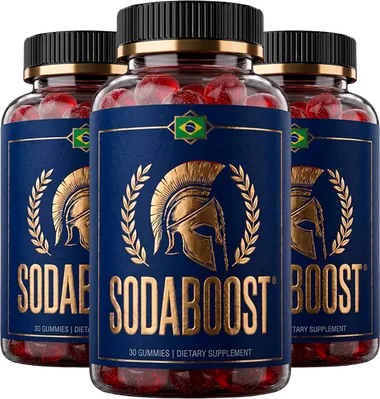
Try SodaBoost for 60 days1 gummy a day · from $49 a bottle · free U.S. shipping on 3 or 6 bottles
Order nowWho should skip it
Who should avoid ashwagandha?
Pregnant people should avoid ashwagandha (NCCIH, Ashwagandha). Anyone with a liver or thyroid condition should ask a doctor first.
Are pregnant or nursing, have liver disease, have a thyroid or autoimmune condition, or take diabetes, blood pressure, thyroid, sedative or immune-suppressing medicine. Stop and get checked if you notice yellow eyes, dark urine or new itching.
SodaBoost is labeled for adults. The label's own warning also asks anyone on medication or with a medical condition to consult a doctor first.
Bottom line
Is the ashwagandha in SodaBoost worth it?
Ashwagandha has some of the better research in the blend, mostly for stress and sleep. One gummy most likely holds 5 mg or less, a small fraction of trial doses. If ashwagandha is the reason you are buying, a single-ingredient product with a printed dose fits that goal better. SodaBoost is a once-a-day gummy with a long, low-dose ingredient list.
Keep exploring
Other ingredients in the SodaBoost blend
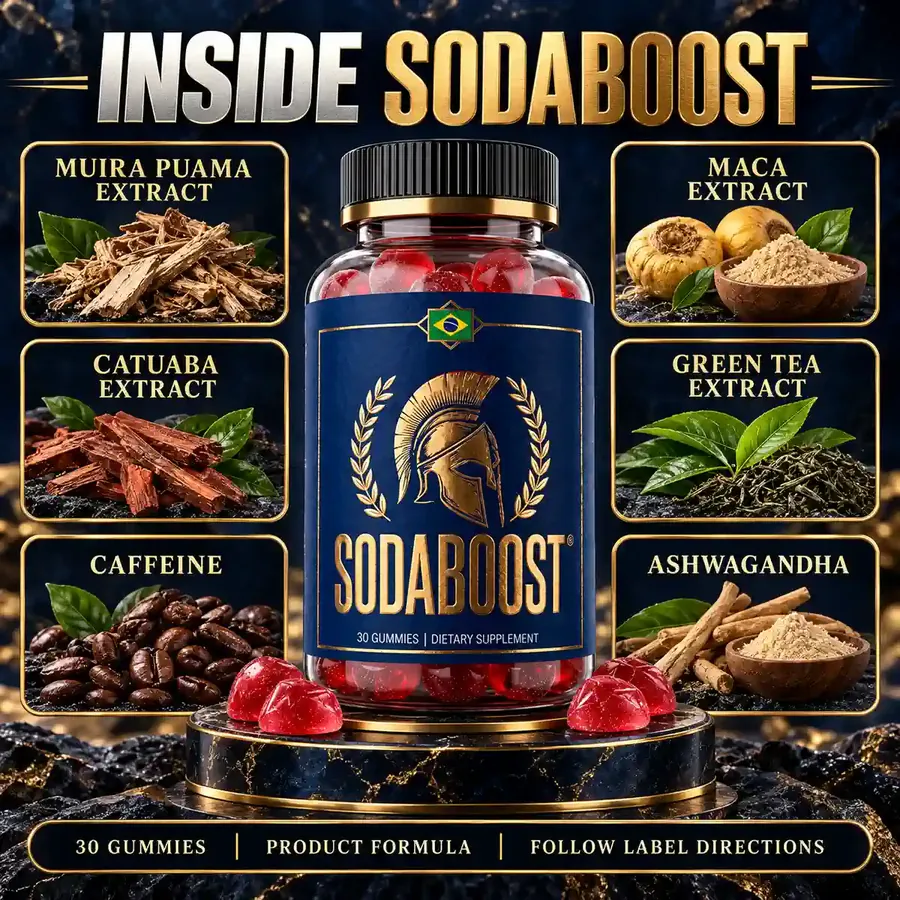
Ashwagandha is one of nine. The label lists caffeine just before it, with the only printed amount: 5 mg. Read the caffeine profile or see every line typed out on the SodaBoost Supplement Facts page.
FAQ
Ashwagandha in SodaBoost: common questions
How much ashwagandha is in SodaBoost?
The bottle leaves that blank. Ashwagandha is part of an 82 mg blend and is listed sixth, after caffeine at 5 mg. Since blends are listed by weight, it most likely weighs 5 mg or less per gummy, well below the 250-600 mg used in sleep trials.
Is 5 mg of ashwagandha enough to do anything?
No study has shown an effect at that amount. Trials for stress and sleep used 240 mg or more a day. A few milligrams is closer to a trace than a studied dose, so do not expect the effects reported in those trials from one gummy.
What are the side effects of ashwagandha?
The most common ones are mild: upset stomach, loose stools and drowsiness. Rare cases of liver injury have been reported, and it can change thyroid hormone levels. Stop and see a doctor if you notice yellow eyes, dark urine or itching.
Can I take ashwagandha with thyroid medicine?
Ask your doctor first. Ashwagandha can raise thyroid hormone levels, which could add to thyroid medicine. The amount in one SodaBoost gummy is small, but your doctor can judge it alongside your blood tests and current dose.
Is ashwagandha safe to take every day?
For most healthy adults it is possibly safe for up to about 3 months, based on the trials so far. Longer daily use has not been studied well. People who are pregnant, or who have liver or thyroid disease, should not use it without medical advice.
Does ashwagandha make you sleepy?
It can. Drowsiness is one of the side effects reported in trials, and it may add to sedatives or sleep aids. At the small amount in a SodaBoost gummy this is less likely, but watch how you feel the first few days.
Can women take ashwagandha?
Adult women can take ashwagandha, but pregnant people should avoid it. SodaBoost itself is sold for men's energy, and its label asks anyone pregnant or nursing to consult a doctor before use.
Who wrote this
Written and reviewed by
Plain-language pages built from the label, the sales page and linked public health sources.
Last updated . Read our editorial standards and how we check reviews. This website is run by a U.S. stocking partner, not by the manufacturer. We earn money when you buy through our order links.
Keep reading
More about SodaBoost
Ingredients
All nine blend ingredients in label order, what each was studied for, and how 82 mg compares with research doses.
Read more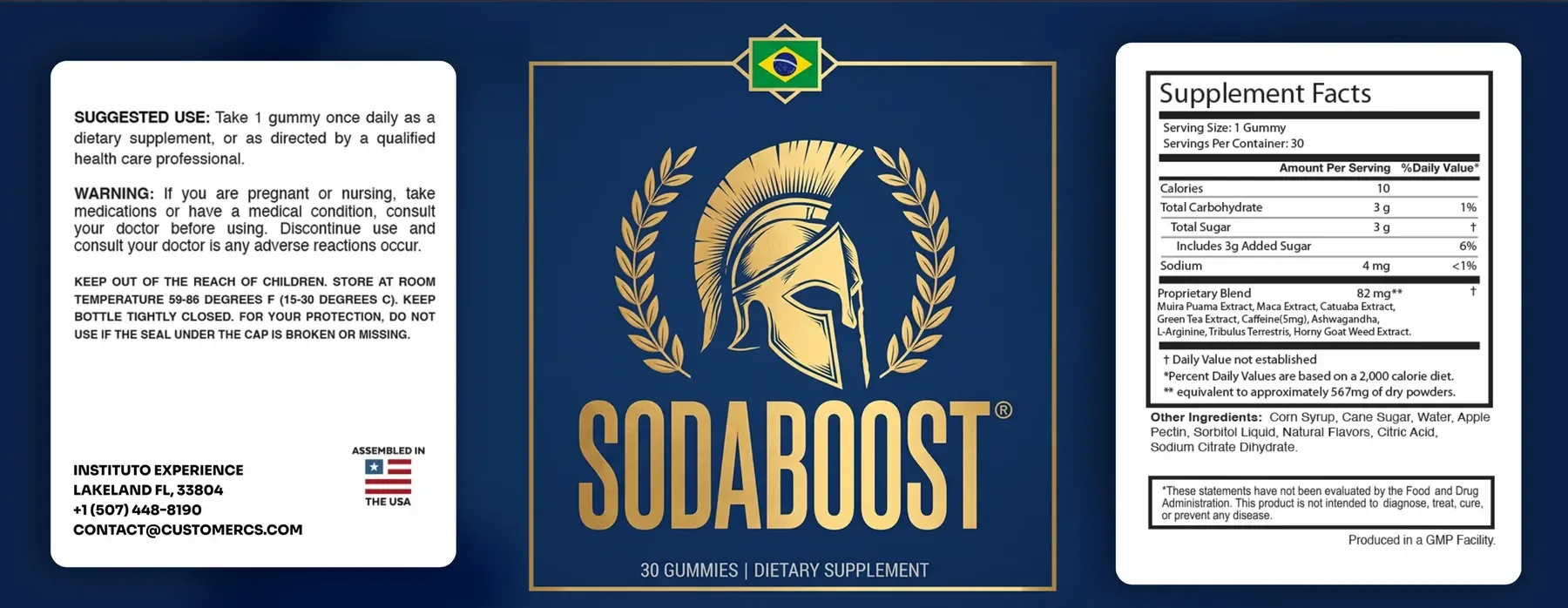
Side effects
Side effects for all nine ingredients, the medicines that clash with them, and when to call a doctor.
Read moreL-arginine
L-arginine is seventh in the blend. Studies used grams, and it clashes with nitrates and ED medicine.
Read moreU.S. stocking partner for SodaBoost
Ready to try SodaBoost?
Pick a pack. One gummy a day, and every pack lasts at least 60 days, the whole satisfaction window.
- Secure checkout
- 60-day satisfaction window
- Ships from the U.S. with tracking